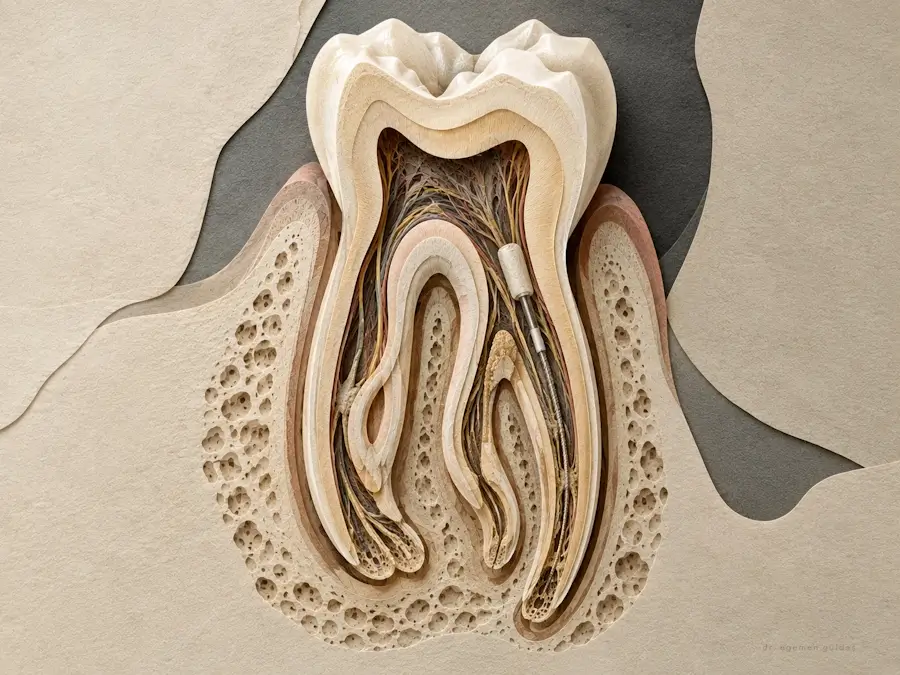
Some dental problems require more than a routine root canal procedure. Unusual root canal anatomy, heavily calcified canals, previous treatment complications or persistent symptoms can make diagnosis and treatment more challenging. In these situations, a detailed assessment helps determine the most appropriate way forward.
Complex endodontic cases involve teeth with conditions that may require advanced diagnostic assessment, specialist treatment planning or a combination of endodontic procedures. The aim is to identify the cause of the problem, evaluate whether the tooth can be preserved and select a treatment approach based on the clinical findings.
Dr. Egemen Güldaş, DDS, PhD, assesses complex conditions affecting the dental pulp, root canal system and tissues surrounding the roots. Each case is evaluated individually, with attention to the tooth’s condition, previous treatment and available treatment options.
What Are Complex Endodontic Cases?
Complex endodontic cases are situations in which diagnosing or treating disease inside a tooth requires additional consideration. The difficulty may arise from the tooth’s natural anatomy, changes caused by disease or previous dental procedures, or uncertainty about the source of persistent symptoms.
A tooth may have more than one contributing problem. For example, a previously treated tooth with persistent discomfort may require assessment for residual infection, a missed canal, a restoration problem or a possible crack.
There is no single procedure for every complex case. Treatment may involve primary root canal treatment, root canal retreatment, microscope-assisted procedures, endodontic surgery or another approach, depending on the diagnosis. In some situations, the most appropriate recommendation may be to avoid further endodontic treatment if the tooth cannot be predictably preserved.
Which Conditions Can Make Endodontic Treatment More Complex?
Calcified root canals
Root canals can become narrower or partially blocked by mineralised tissue over time. This process may occur with ageing, irritation or dental trauma. When a canal is difficult to locate or access, treatment requires careful assessment to reduce the risk of procedural complications.
The presence of calcification does not automatically mean that a tooth cannot be treated. The degree of narrowing, the canal’s location and the condition of the tooth all influence the available options.
Unusual root canal anatomy
Some teeth have curved, narrow, branching or otherwise complex canal systems. These anatomical variations can make it harder to locate, clean and fill all parts of the root canal system.
Understanding the anatomy before and during treatment is important because untreated areas may contribute to persistent or recurrent disease.
Persistent problems after root canal treatment
If symptoms continue or a lesion around the root remains after treatment, further investigation may be necessary. Possible explanations include missed canals, persistent infection, a compromised restoration or other conditions affecting the tooth and surrounding tissues.
The appropriate next step depends on identifying the likely cause. Additional treatment should not be recommended solely because a tooth has undergone root canal treatment before.
Complications from previous treatment
Previous procedures can sometimes leave technical challenges, such as a separated instrument inside a canal, a blockage or a perforation. These findings require individual assessment because their location, extent and relationship to the surrounding tissues affect the risks and treatment possibilities.
Not every complication needs to be corrected in the same way. The potential benefit of intervention must be weighed against the risk of further weakening or damaging the tooth.
Suspected cracks or root fractures
Cracks can produce symptoms that overlap with other dental conditions. Some are difficult to identify during an initial examination, and a vertical root fracture may substantially affect the long-term outlook of a tooth.
Assessment may include the patient’s symptoms, clinical examination, periodontal findings and appropriate imaging. Even with careful investigation, some cracks can remain difficult to confirm. Treatment recommendations depend on the available evidence and the location and extent of the suspected damage.
Dental trauma and immature teeth
A tooth affected by trauma may develop pulp damage or changes around the root, sometimes after an interval without obvious symptoms. In teeth whose roots are still developing, treatment decisions also need to account for the stage of root formation and the condition of the surrounding tissues.
These cases require an approach tailored to the type of injury, the patient’s age and the long-term needs of the affected tooth.
How Are Complex Endodontic Cases Evaluated?
Accurate diagnosis is particularly important when a tooth has already undergone treatment or the source of symptoms is unclear. The assessment is designed to establish what is known, identify remaining uncertainties and compare the available options.
1. Review of symptoms and dental history
The clinician asks about pain, sensitivity, swelling, previous injuries and earlier dental procedures. Existing dental records and X-rays can provide useful information about the original diagnosis and treatment.
2. Clinical examination
The tooth and surrounding tissues are examined. Depending on the case, this may include tests of the tooth’s response, assessment of tenderness, evaluation of the gums and inspection of the existing restoration.
No single test is sufficient for every diagnosis. Findings are interpreted together to build a clearer clinical picture.
3. Dental imaging when indicated
Dental X-rays help assess root anatomy, previous root canal fillings and changes around the root. In selected cases, three-dimensional imaging such as cone beam computed tomography (CBCT) may be considered when conventional imaging does not provide enough information and the additional findings could influence treatment planning.
Advanced imaging is not necessary for every patient. Its use depends on the clinical question, expected diagnostic benefit and individual circumstances.
4. Assessment of treatment options
Once the findings have been reviewed, the clinician considers the likely benefits and limitations of the available approaches. These may include root canal treatment, retreatment, a selected surgical procedure, monitoring where appropriate or extraction if the tooth cannot be predictably preserved.
The decision also takes account of the tooth’s structural condition and whether it can be restored after endodontic treatment.
What Treatment Options May Be Available?
The treatment for a complex endodontic problem depends on its underlying cause. Different procedures may be appropriate in different circumstances.
- Root canal treatment: Used when the dental pulp is irreversibly inflamed or infected and the tooth can be treated and restored.
- Root canal retreatment: Considered when previous root canal treatment has not resolved the problem or disease has returned and a further nonsurgical approach is appropriate.
- Microscope-assisted endodontics: Magnification and improved illumination may help the clinician examine complex anatomy or manage selected treatment complications.
- Endodontic surgery: May be considered for certain persistent problems around a root when nonsurgical treatment is unsuitable or insufficient.
- Regenerative endodontic procedures: May be an option for selected immature permanent teeth with pulp necrosis, depending on the clinical findings.
- Extraction and replacement planning: May be discussed when a tooth has a poor prognosis, such as in certain cases of extensive structural damage or root fracture.
Not every option is suitable for every patient. The goal is to choose a treatment that addresses the diagnosis while taking account of the tooth’s long-term prospects.
Can a Complexly Treated Tooth Be Preserved?
In some cases, yes. A difficult diagnosis or previous treatment complication does not automatically mean that a tooth must be removed. However, preservation depends on more than the root canal procedure itself.
Important considerations include the amount of healthy tooth structure remaining, the presence of cracks or fractures, the condition of the surrounding tissues, the possibility of controlling infection and whether a durable restoration can be provided.
Even technically successful endodontic treatment may have a limited long-term outlook if the tooth cannot be restored adequately. For this reason, endodontic treatment planning should consider both the root canal system and the final restoration.
The expected outcome and remaining uncertainties should be discussed before treatment begins. No procedure can guarantee that every complex tooth will be preserved.
Complex Endodontic Treatment for International Patients in Antalya
Patients travelling to Antalya for dental treatment may have previous X-rays, treatment records or information from a dentist in their home country. Sharing these records before the appointment can help the clinician understand the history of the case and identify questions that need further assessment.
Previous records are useful, but they do not replace a clinical examination. The treatment plan may change after the tooth and surrounding tissues have been examined.
Complex cases can require more than one appointment, additional diagnostic procedures or follow-up over time. International patients should discuss the expected schedule before booking flights or committing to a short stay. Where further monitoring is needed after returning home, arrangements with a local dentist may also be helpful.
A clear plan should cover the proposed treatment, possible alternatives, expected review appointments and what to do if symptoms develop after travel.
Frequently Asked Questions
What makes an endodontic case complex?
A case may be considered complex when the tooth has unusual root anatomy, calcified canals, previous treatment complications, persistent infection or a suspected crack. The difficulty may relate to diagnosis, treatment access or the long-term prospects of preserving the tooth.
Should I see an endodontist if my previous root canal treatment has failed?
An endodontic assessment may help identify why a problem has persisted or returned and whether further treatment is appropriate. Depending on the findings, options may include retreatment, surgery, monitoring or another treatment plan.
Can a calcified root canal still be treated?
Some calcified canals can be treated, but the difficulty and risks vary. The extent and location of calcification, the tooth’s anatomy and the surrounding conditions determine whether treatment is feasible and what approach may be appropriate.
Do complex endodontic cases always require a dental microscope?
No. A dental microscope can be useful in selected cases, particularly when locating narrow canals or examining treatment complications. Its use depends on the clinical situation, and magnification alone cannot resolve every problem.
Is tooth extraction always necessary after a complicated root canal procedure?
No. Some complications can be managed while preserving the tooth. However, extraction may be the more appropriate option when a tooth has a severe fracture, insufficient remaining structure or another condition that makes predictable preservation unlikely.
Can complex endodontic treatment be completed during a short visit to Antalya?
Some cases may be managed within a limited visit, while others require multiple appointments or longer-term follow-up. The schedule depends on the diagnosis and the procedure required. Patients travelling from abroad should discuss timing and follow-up before arranging their trip.