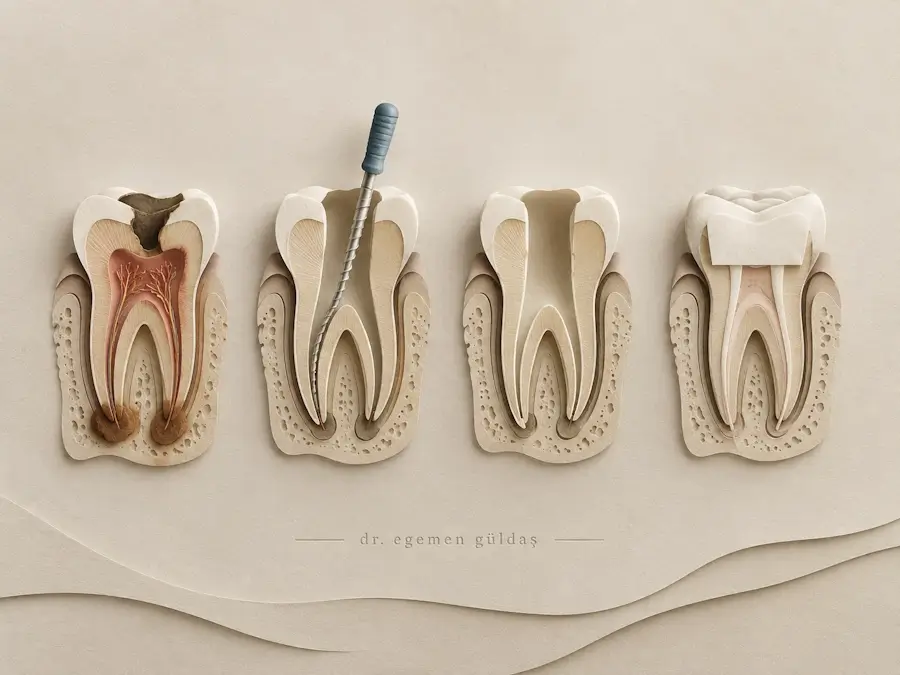
Root canal treatment is an endodontic procedure used to treat inflammation or infection within a tooth while preserving its remaining structure. Dr. Egemen Güldaş, DDS, PhD, an endodontist in Antalya, evaluates the condition of the tooth and its root canal system to determine whether endodontic treatment is appropriate.
The procedure involves removing inflamed or infected pulp tissue, cleaning and disinfecting the root canals, and sealing them to reduce the risk of further infection. The treated tooth can then be restored to support its function and protect the remaining tooth structure.
For international patients visiting Antalya, an initial clinical assessment helps establish the treatment requirements, the likely number of appointments, and the need for a definitive restoration. The recommended approach depends on the condition of the tooth and the individual clinical findings.
What Is Root Canal Treatment?
Inside each tooth is a soft tissue called the dental pulp, which contains nerves, blood vessels and connective tissue. The pulp extends from the crown of the tooth into the root canals.
Deep tooth decay, cracks, fractures, trauma or repeated dental procedures can cause the pulp to become inflamed or infected. If the damage is irreversible, root canal treatment may be recommended to remove the affected tissue and preserve the natural tooth.
During treatment, the root canal system is cleaned, disinfected and sealed with a suitable filling material. The tooth is then assessed for the type of restoration needed to protect it against further damage.
When Is Root Canal Treatment Necessary?
The need for root canal treatment is determined by a clinical examination, appropriate diagnostic tests and dental imaging. Symptoms can help identify a problem, but they do not always reveal the extent of the damage.
Persistent Toothache
Pain that occurs spontaneously, continues after exposure to hot or cold temperatures, or interferes with sleep may indicate inflammation of the dental pulp. An examination is needed to establish the cause and determine whether root canal treatment is indicated.
Pain When Biting or Chewing
Discomfort when biting may be associated with inflammation around the root, a crack in the tooth or other dental conditions. The source of the pain must be identified before a treatment plan is established.
Deep Tooth Decay
When decay extends into the pulp, the affected tissue may become irreversibly inflamed or infected. Depending on the extent of the damage, root canal treatment may be required to retain the tooth.
Dental Abscess or Swelling
An infection originating inside a tooth can spread to the surrounding tissues and cause swelling, tenderness or an abscess. These symptoms require prompt dental assessment. Facial swelling accompanied by difficulty swallowing or breathing requires emergency medical care.
Tooth Discolouration or Previous Dental Trauma
A tooth that becomes darker after an injury may have sustained damage to its pulp, even if no fracture is visible. Discolouration alone does not establish the need for root canal treatment, so further examination is necessary.
How Is Root Canal Treatment Performed?
Treatment is planned according to the affected tooth, the anatomy of its root canals, the extent of infection and the amount of healthy tooth structure remaining.
1. Clinical Examination and Diagnosis
The tooth is examined, and its symptoms, previous dental treatment and relevant medical history are reviewed. Pulp tests, clinical tests and dental radiographs may be used to assess the condition of the tooth and the surrounding tissues.
The findings help determine whether root canal treatment is appropriate or whether another treatment option should be considered.
2. Local Anaesthesia and Isolation
Local anaesthesia is administered to numb the tooth and surrounding area. The tooth is then isolated, usually with a dental dam, to help maintain a controlled working environment and prevent contamination by saliva.
3. Removal of Inflamed or Infected Pulp
An opening is made in the tooth to access the pulp chamber and root canals. Inflamed or infected pulp tissue is removed, allowing the internal canal system to be cleaned.
4. Cleaning, Disinfection and Shaping
The root canals are carefully cleaned and shaped using appropriate endodontic instruments and irrigation solutions. This stage is important for reducing microbial contamination and preparing the canals for filling.
The approach is adapted to the anatomy of the tooth, including the number, curvature and configuration of its root canals.
5. Root Canal Filling and Sealing
Once the canals have been adequately prepared, they are filled with a suitable root canal filling material and sealed. Depending on the clinical findings, the tooth may receive a temporary restoration before its definitive restoration is completed.
6. Final Restoration
After endodontic treatment, the remaining tooth structure must be assessed to determine the most appropriate restoration. A filling or a crown may be recommended depending on the extent of damage, the tooth’s position and the forces it must withstand.
A durable coronal seal is essential to help prevent bacterial contamination and protect the treated tooth.
Why Choose an Endodontist for Root Canal Treatment?
Endodontics is the dental specialty concerned with the diagnosis and treatment of diseases and injuries affecting the dental pulp and tissues surrounding the roots.
Dr. Egemen Güldaş, DDS, PhD, focuses on endodontic diagnosis and treatment, including cases in which the anatomy of the root canal system or the condition of the tooth requires particular attention.
Root canal treatment requires an understanding of internal tooth anatomy, the causes of pulpal and periapical disease, and the technical requirements of cleaning, disinfecting and sealing the root canal system.
An endodontic assessment can help clarify the condition of a tooth, the feasibility of preserving it, and the restorative treatment that may be needed afterwards. The suitability of treatment and the expected outcome depend on the individual case.
Root Canal Treatment for International Patients in Antalya
Patients who live in Antalya, visit the city on holiday or travel to Türkiye for dental care may need to coordinate treatment with their travel schedule.
Before treatment begins, the clinical assessment should establish the urgency of care, the likely treatment stages and whether additional appointments are necessary. Some cases can be completed in one visit, while others require more than one appointment depending on the diagnosis, infection, canal anatomy and clinical progress.
International patients should also consider the time required for the final restoration and any recommended follow-up. A definitive crown or other restoration may need to be arranged separately, depending on the treatment plan.
If previous dental records or radiographs are available, sharing them before the appointment may help with the initial assessment. However, they do not replace an in-person examination when one is clinically necessary.
Recovery After Root Canal Treatment
Mild tenderness or sensitivity around the treated tooth may occur for several days, particularly when infection or inflammation was present before treatment. Symptoms should generally improve over time.
Patients should follow the instructions provided after the procedure and avoid placing excessive pressure on a tooth that has not yet received its definitive restoration.
Contact the treating dentist if pain becomes severe, swelling develops or symptoms worsen rather than improve. A clinical review may be necessary to assess healing or identify a complication.
Long-term tooth preservation depends on several factors, including the original condition of the tooth, the quality of the root canal treatment, the integrity of the final restoration and ongoing oral hygiene.
Frequently Asked Questions About Root Canal Treatment
Is root canal treatment painful?
Local anaesthesia is used to numb the tooth and surrounding tissues during treatment. Most patients tolerate the procedure well, although the experience varies according to the condition of the tooth and individual circumstances. Some tenderness may occur afterwards.
How many appointments are required?
Some root canal treatments can be completed in one appointment. Others require two or more visits, depending on the complexity of the root canal system, the presence of infection and the clinical response to treatment.
Can a tooth be preserved after root canal treatment?
Root canal treatment is intended to preserve a natural tooth by treating disease inside it. Whether the tooth can be retained depends on factors such as the extent of structural damage, the presence of cracks, periodontal support and the feasibility of a suitable restoration.
Will I need a crown after root canal treatment?
Not every treated tooth requires a crown. The decision depends on the amount of remaining tooth structure, the location of the tooth and its functional demands. Teeth with substantial structural loss may require a crown or another protective restoration.
Can I have root canal treatment during a holiday in Antalya?
Treatment may be possible during a visit to Antalya, but the appropriate schedule depends on the diagnosis and clinical requirements. Some cases need multiple appointments or subsequent restorative care. An assessment should establish whether the treatment can be completed safely within the available travel period.
What happens if root canal treatment is delayed?
If an inflamed or infected pulp is left untreated, the condition may progress and lead to persistent pain, infection around the root or an abscess. The urgency of treatment depends on the clinical findings. Prompt assessment is advisable when symptoms suggest pulpal infection.
Clinical Assessment for Root Canal Treatment
If you have persistent tooth pain, sensitivity, swelling or have been advised to undergo root canal treatment, a clinical assessment can help establish the cause of the problem and identify suitable treatment options.
Dr. Egemen Güldaş, DDS, PhD, provides endodontic assessment and treatment in Antalya. The recommended approach is determined by the condition of the tooth, diagnostic findings and the feasibility of restoring it after treatment.